A square metre of rental housing in Tilburg costs around €16 a month, little more than half of what Amsterdam tenants pay. This is the second city of Brabant, home to roughly 230,000 people, a research university and an intercity station, and it is still priced like a provincial town.
The discount is historical. Tilburg was the wool capital of the Netherlands until the textile industry collapsed in the 1960s, and the city spent decades wearing the reputation that came with empty mills and hasty post-war planning. That reputation is now about fifteen years out of date.
The centre has been rebuilt around a converted railway yard, and the price gap with the rest of Brabant has not caught up yet. That combination is the entire argument of this article, and of our Tilburg relocation page.
What €1,500 buys you: Tilburg against its neighbours
Across the last ~1,550 housing requests submitted to us, the median maximum budget was €1,500 per month, and more than 90 percent of that demand chased the same five Randstad cities. In Utrecht, €1,500 is the median ask and the market treats you accordingly. In Tilburg, €1,500 puts you above the typical apartment asking price with room to spare. Here is how the four Brabant cities compare on mid-2026 portal data:
| City | Avg rent per m2 | Typical apartment asking rent | Direction |
|---|---|---|---|
| Tilburg | €15.50-€16 | €1,200-€1,400 | Rising fast from a low base |
| Eindhoven | €19.55 (Pararius Q1 2026) | €1,300-€1,650 | +10% year on year, fastest of the G5 |
| Den Bosch | €19-€22 | €1,500-€1,800 | Up roughly 12% through late 2025 |
| Breda | €20-€20.50 | €1,600-€1,850 | Highest asking rents in Brabant |
One honesty note: those figures mix sources (Pararius for Eindhoven, portal averages such as Kamer.nl and Huurstunt for the rest), so they are not perfectly like for like. But every source we checked produces the same ordering, with Tilburg 20 to 25 percent below its neighbours per square metre. That is not a rounding error. It is a different market.
It is also a closing window. Pararius recorded a 20.1 percent year-on-year jump in Tilburg's square-metre price in the fourth quarter of 2025. Part of that was composition, since smaller and therefore pricier-per-metre homes dominated the lettings that quarter. But a thin market that swings 20 percent in a quarter is telling you something: there is very little supply, and demand has started to arrive.
The Spoorzone: a locomotive yard became the best address in the city
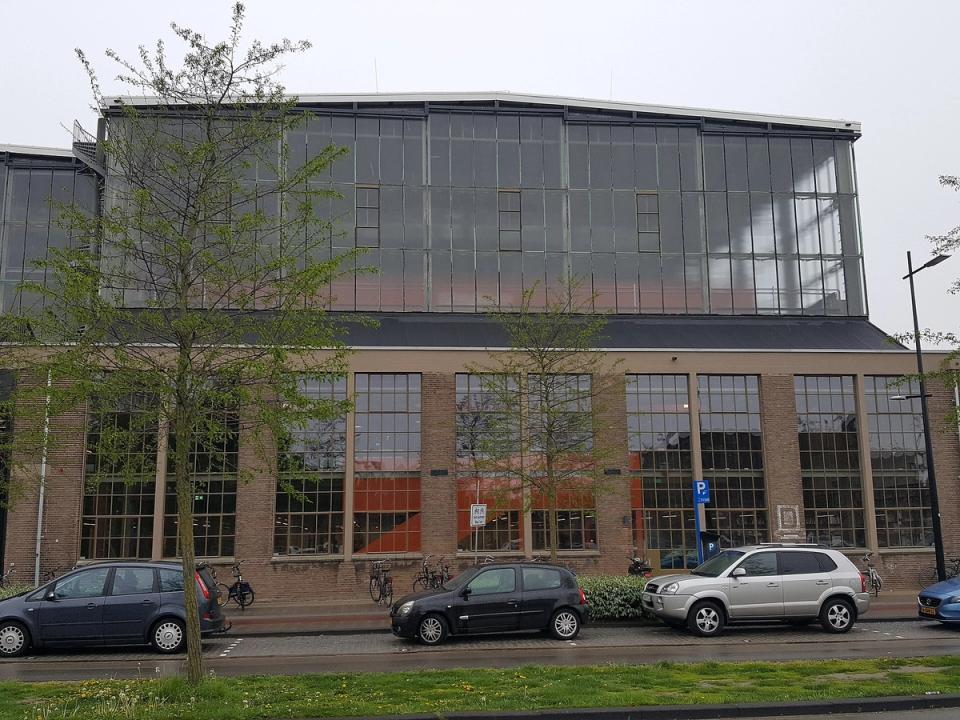
For over a century, NS repaired its trains in a walled-off workshop complex directly behind Tilburg Centraal. When the workshops closed, the city kept the industrial buildings and put the new city inside them. The flagship is the LocHal, a locomotive hall turned public library and workspace, named World Building of the Year in 2019. Nobody outside Brabant seems to know it exists.
The residential phase is happening now. The first housing tower in the Spoorzone, 96 rental apartments by WonenBreburg, started construction at the end of 2025, with completion expected in the second quarter of 2027. West of the station, the Kenniskwartier between the centre and the Tilburg University campus carries a national NOVEX designation for 7,500 new homes and 7,500 jobs, around 5,000 of them in a first phase running to 2030.
The municipality and the province signed a cooperation agenda for it in February 2026, including a study to upgrade Tilburg Universiteit station.
Why this matters to a renter: it is a genuine pipeline of new-build apartments in walkable, central locations, in a country where that pipeline has mostly stalled. Comparable stock next to a Randstad intercity station starts above €2,000. The textile story runs through all of it, from the TextielMuseum in a former wool mill to the regenerated Piushaven harbour.
Who pays the rent: a university at one end, Europe's warehouses at the other
At one end of the local economy sits Tilburg University, one of Europe's strongest schools for economics, law and data science, which cannot house all of its incoming internationals in reserved accommodation. The Netherlands was short roughly 26,500 student rooms in 2025, and Tilburg feels it every August. Around a quarter of all requests in our own national intake mention university or studies, so we see that pressure weekly.
At the other end is one of the busiest logistics corridors in Europe. The Vossenberg, Kraaiven and Loven business parks, plus the new Wijkevoort site, host distribution operations for CEVA Logistics, DSV and Mainfreight, and Decathlon runs an international centre here serving six countries. Glassdoor listed well over 3,000 open logistics roles in Tilburg during 2025, many of them English-friendly, from warehouse operations to supply-chain planning.
In between sit two of the country's biggest insurers, Interpolis and CZ, both headquartered in Tilburg, and the large ETZ hospital. It is a real economy, just not a flashy one.
Living in Tilburg, working in Eindhoven
The maths that makes Tilburg interesting for Brainport employees: the intercity to Eindhoven Centraal takes just over half an hour, several times per hour. A two-bedroom apartment in Eindhoven asked around €1,650 on RentHunter data from spring 2026; a comparable Tilburg flat sits closer to €1,300. That difference funds an NS subscription with money left over, every month.
Eindhoven is also the fastest-rising rental market of the five big cities at 10 percent year on year. If you want to see what you would be paying instead, compare Eindhoven directly.
One honest caveat: if your office is the High Tech Campus rather than central Eindhoven, add a bus leg and count on 60 to 75 minutes door to door. Daily, that wears people down. For Strijp, the station district or the centre, the commute is genuinely comfortable.
In the other directions, Breda is 12 to 15 minutes away with four or more trains per hour, Den Bosch about 15 minutes, and Utrecht under an hour. Clients of ours who search across a 30-minute transit radius consistently find homes faster, and from Tilburg that radius covers three other cities, including Breda and Den Bosch.
Neighbourhoods, with numbers attached
- Dwaalgebied and the city centre: the tangle of small streets around the Korte Heuvel is where Tilburg's bar and restaurant life actually happens. Studios €900 to €1,100, one-bedroom apartments €1,100 to €1,400.
- Spoorzone and Theresia: new-build and converted industrial stock next to the station, plus the pre-war Theresia quarter beloved by students and young professionals. €1,100 to €1,600.
- Piushaven: the regenerated inland harbour ten minutes' walk from the centre, waterfront apartments and terraces on the quay. €1,200 to €1,700, the closest thing Tilburg has to a premium address.
- Armhoefse Akkers and Oud-Zuid: 1930s streets bordering the Moerenburg green belt, quiet, leafy and five minutes' cycle from the station. Family houses €1,400 to €1,800 when they appear, which is rarely.
- Oud-Noord (Goirke, Groeseind): characterful former workers' housing around the TextielMuseum, mixed and lively, the best value in the city. €950 to €1,300.
- Reeshof: a vast family district in the west with its own rail station, modern houses, schools and space. €1,300 to €1,700 for a family home.
Who should not move to Tilburg
Be realistic about three things. First, if you work in Amsterdam or on the Zuidas, the train takes around an hour and a half door to door. Occasionally fine, daily a mistake, and no rent saving fixes it. Second, the local English-speaking job market is narrow outside logistics and the university. If your career plan depends on switching employers locally, Eindhoven or the Randstad serves you better.
Third, this is a Brabant city to its bones: carnival shuts the place down for a week, socialising runs through Dutch, and the international community is dominated by students. Some of our clients love exactly that. Others feel isolated within a month. Know which type you are before you sign.
The market itself has a catch too. Free-sector supply is thin, noticeably thinner than Eindhoven's on any given day, and the national picture explains why: the Affordable Rent Act has pushed small landlords to sell across the country, a dynamic we unpack in our analysis of the Dutch rental market in 2025 and 2026. Cheap does not mean easy. It means less competition per listing, not more listings.
How to actually land a rental here
- Set alerts on Pararius, Funda and Huurwoningen the day you decide, and check local Tilburg agencies directly, since several never list on the national portals.
- Prepare your file before your first enquiry: passport, employment contract, three payslips or an employer's declaration, and previous landlord reference. Expect a gross income requirement of three times the rent.
- Reply within hours, not days. The good stock in Spoorzone and Piushaven moves in under a week even in this market.
- If your paperwork is thin because you are new to the country, read our guide to renting without Dutch payslips before you apply, not after a rejection.
- Widen the net to Goirle, Berkel-Enschot and Oisterwijk if you have a car or do not mind a short train hop. Prices drop again outside the ring.
An engineer who found us mid-search was fixed on Utrecht with a budget around the national median, worn down by viewings that drew five competing offers in a day. He now rents a two-bedroom apartment near the Piushaven for less, a 35-minute train from his Eindhoven office. That trade is open to almost anyone reading this, for now. If you would rather have someone local run the search, viewings and contract checks, our relocation service does exactly that.
Need help with your relocation?
Book a free 30-minute consultation with one of our relocation experts. No strings attached.
Book free consultationFrequently asked questions
Is Tilburg cheaper than Eindhoven for renting?
Can I live in Tilburg and work in Eindhoven?
Why did Tilburg rents jump 20 percent in late 2025?
Is Tilburg good for international students?
What income do I need to rent an apartment in Tilburg?
By Weronika Wisniewska